

7MMO
Moderator
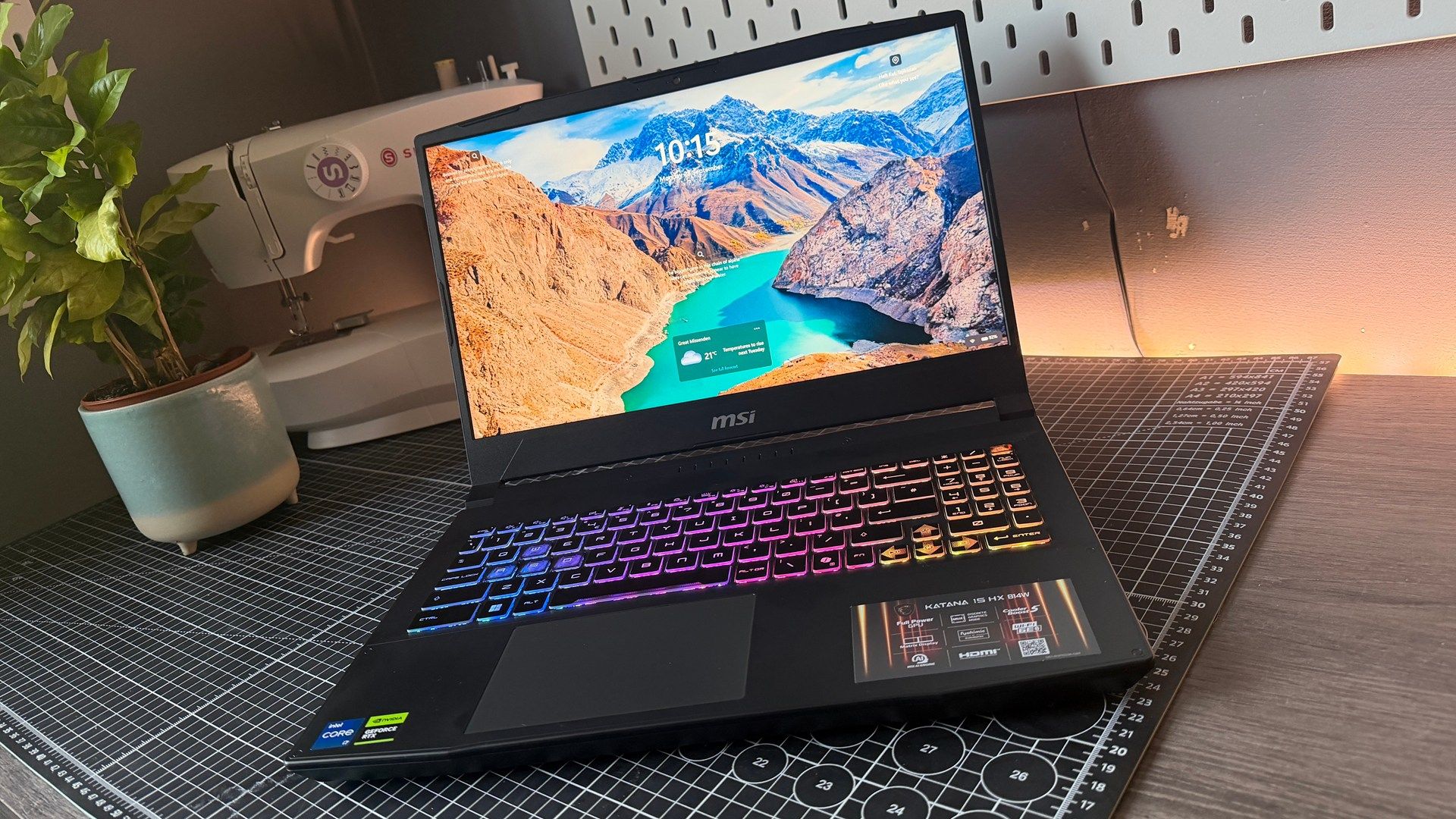
"A union divided cannot stand," reads a famous quote from a famous man. But only now can we finally know why Abraham Lincoln said what he said. There's no shadow of a doubt in my mind he was (in this journalist's opinion), predicting the rise and fall of MSI's Katana 15 HX B14W 2026 edition. Clearly irate with the apparent division it has between its US and UK pricing. This thing is, no word of a lie, $500 more expensive in the US, and that's even before we add sales tax into the equation. Best gaming laptop? Not in the land of the free, that's for damn sure.
In ol' blighty, in the realm of the surprisingly good cooking and cheap dental care, it's a whole other story. What you get for a meagre £1,300 first looks quite solid. And although, yes, that's probably three days of heating this coming winter, if you forgo the soothing warmth of your radiators for a bit you can net yourself an RTX 5060, Core i7 14650HX, and 16 GB of (gloriously dual-channel) 5,600 MT/s DDR5 RAM, all paired nicely with a crisp 2560x1440 "IPS-level" display flickering along 165 times every single second.
For that outlay, I wouldn't blame you in thinking that this is a surprisingly tempting proposition, especially as Black Friday is right around the corner. But it's not without fault, and there's some curious side-effects as a result of the cooling design, that you need to be aware of before you pull the trigger and tell grandma to grab another coat to keep warm.
 You're after a cheap UK deal for a versatile laptop: It's not the ultimate gaming machine, no, but MSI's packed a lot of solid quality hardware in here, and for just shy of £1,300 it does beat out the competition spec for spec.
You're a big fan of DLSS: That RTX 5060 does lead the field when it comes to ray tracing performance compared to its competition at a similar price point.
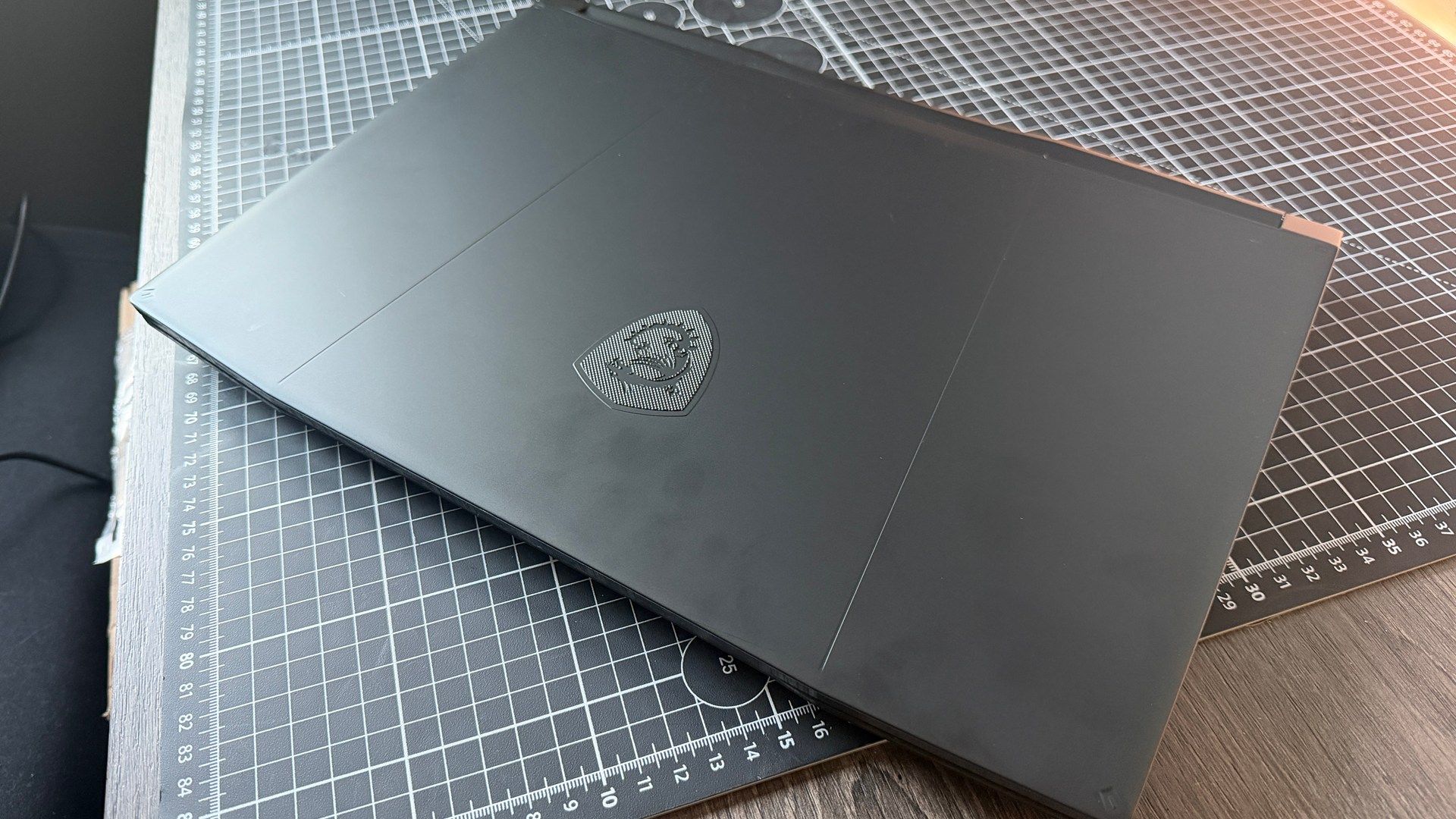
 You're not a fan of the "gamer" aesthetic: It's big bold and ostentatious, with a hexagonal screen bezel, and overall body design. Everywhere you look, it clearly states itself as "for the gamer", so if you're taking this into a business meeting, look away.
You want a CPU and GPU combo that's fully unlocked: The Katana 15 HX technically has a 115 W TGP, but it often taps out at half that, with flailing clock-speeds as a result, we suspect due to CPU bottlenecking.
Future
Future
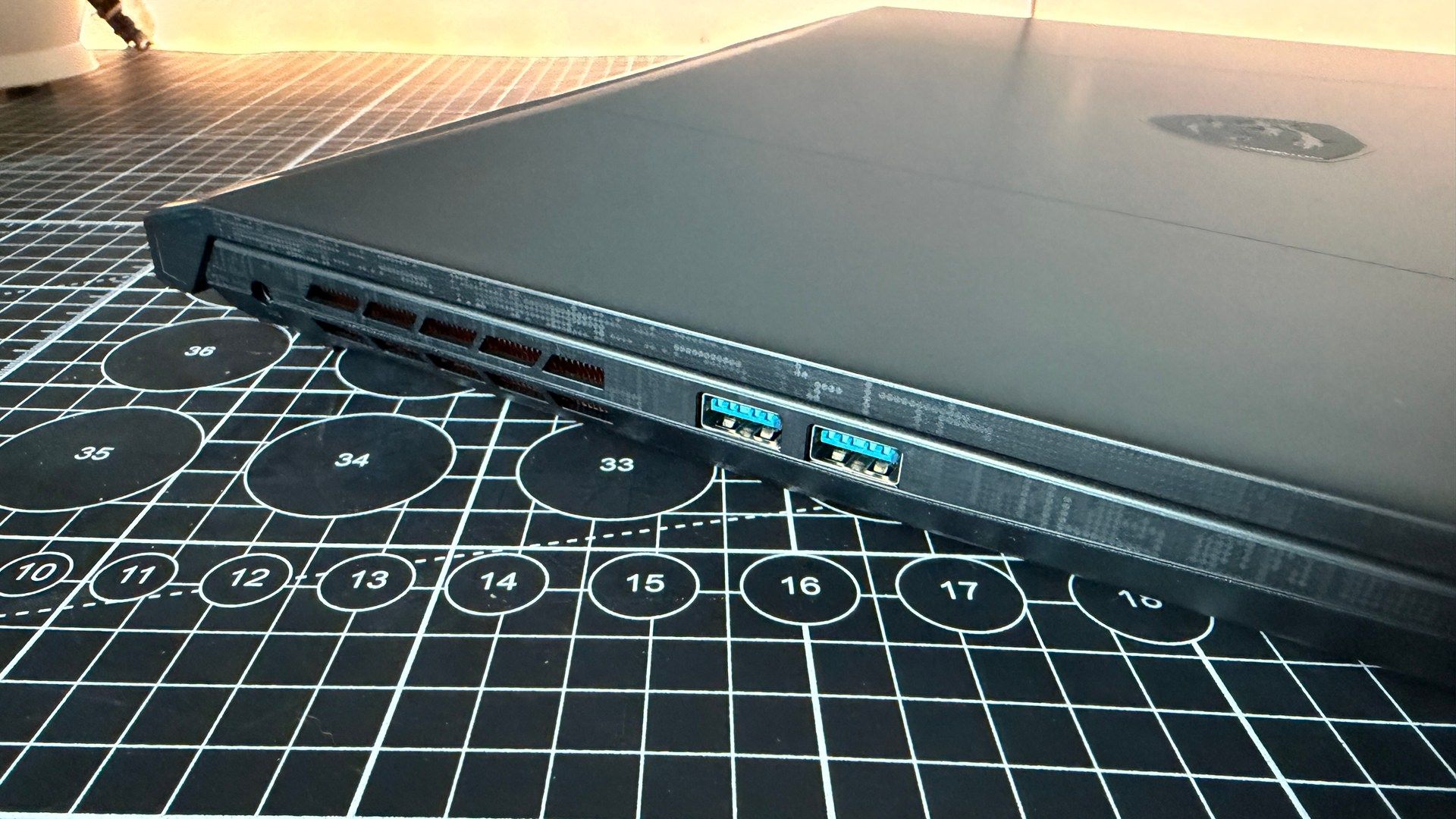
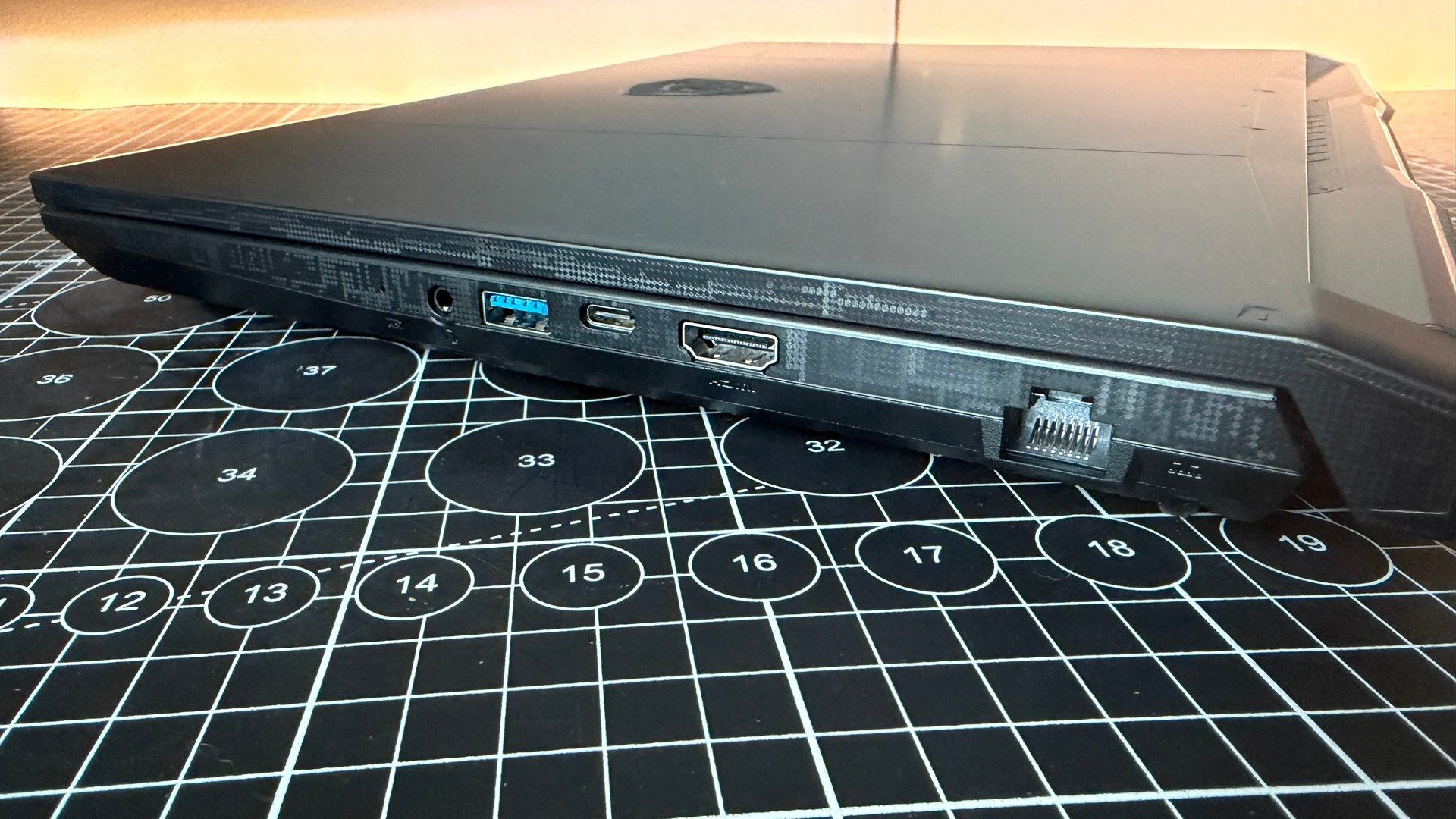
So, we've covered the basics already, chunky GPU that kinda pairs nicely with the 2560 x 1440 "IPS-level" display, 115 W TGP which should give the card a bit of leg room to clock-up nice and high. Should. You get WiFi 6E, and Bluetooth as standard. As well as three USB Type-A ports, a USB-C, Ethernet, 3.5 mm audio, and HDMI out too. That's not a huge amount of connectivity; you may need a USB hub or dongle if you're going to spin this up as your main rig with a few extra periphs, but it's a comfortable enough experience if you're on the move, and I've seen worse recently. Razer's Blade 16, doesn't even come with ethernet and that thing costs a staggering five grand or thereabouts (although to be fair it is very good).
The SSD is a bit underwhelming mind you. It's one of Samsung's… well, I'm not going to reel off the serial code because it's one of those cryptic OEM-only designations that makes no sense to any human that reads it, but in short its an OEM PM9C1b, PCIe 4.0 SSD, that should top out at 7 GB/s on the read and 5.7 GB/s on the writes. It's based on Samsung's in-house Piccolo controller, and taps into 236-layer TLC V-NAND, it's not too dissimilar to the 990 Evo Samsung launched a couple of years back at this point. So y'know, eh…
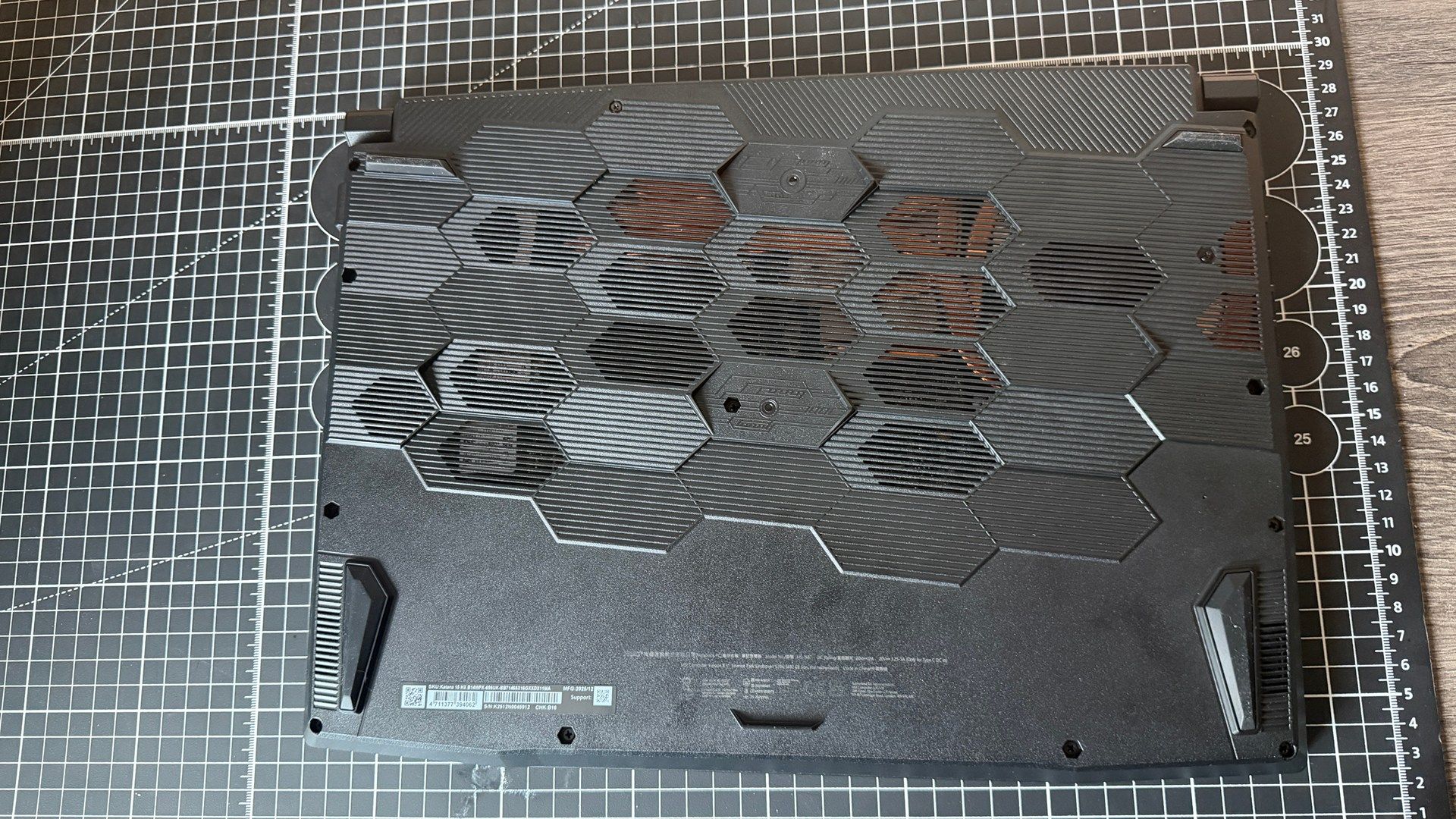
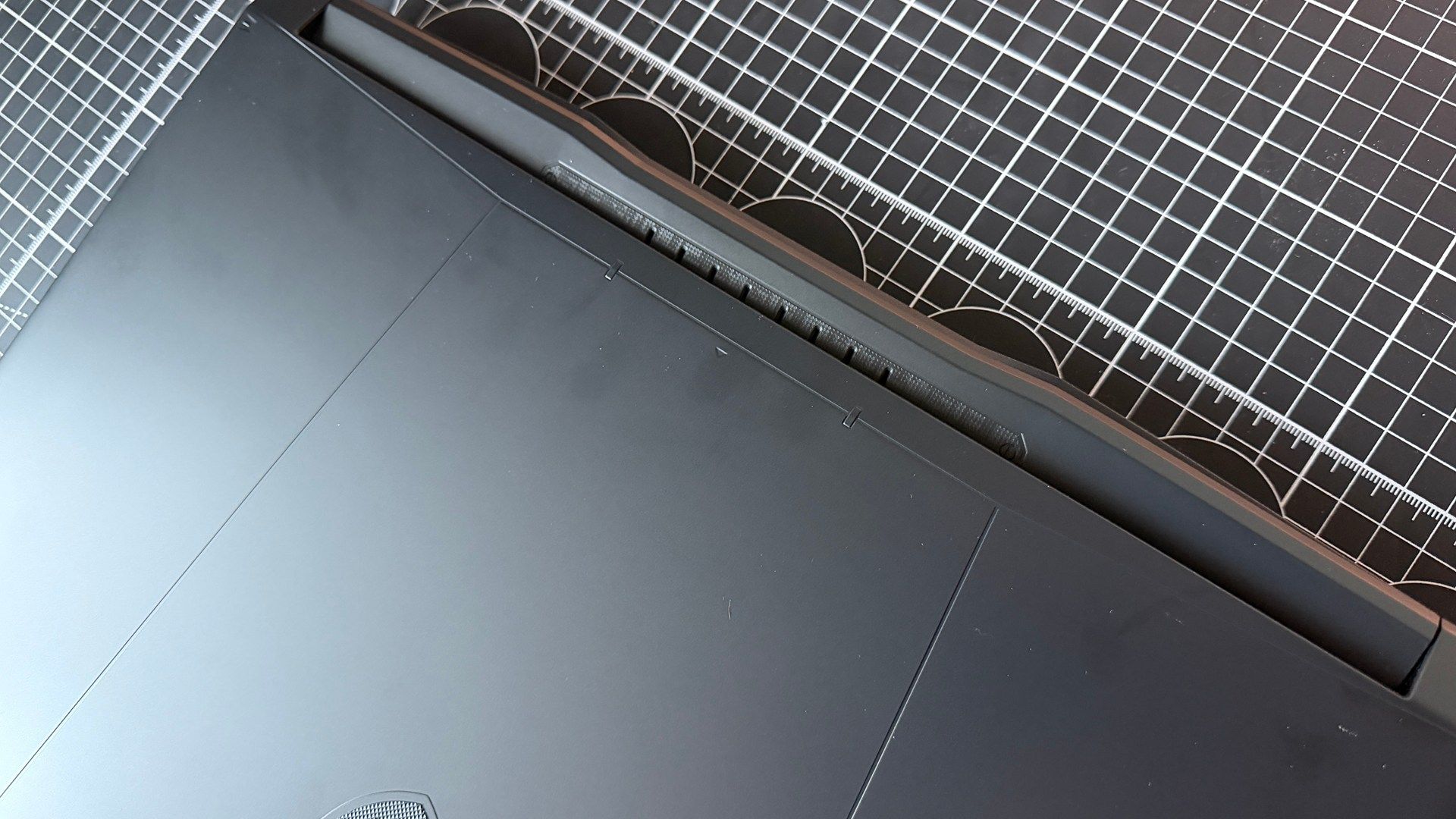
As for the chip, that's Intel's Raptor Lake Core i7 14650HX. Again a little dated, but you do get eight performance cores and eight efficient cores for fully 24 threads, and a max turbo clock speed of 5.2 GHz at full tilt. But it's hot, real hot, and that is I think the biggest issue that the B14W currently has. Certainly if we compare it to something like Asus' TUF Gaming A16.
(Image credit: Future)
Alright, yep let's talk value. Ahem... It's a bit of a double-edged sword. Something that ironically a traditional Katana isn't, and it's mostly dependent on which part of the globe you sit. If you're in the US $1,800 for this kit-out is absurd. Particularly when you have laptops like the Lenovo Legion 5 available for a near identical spec, but with a far better OLED screen for less than that.
And it's that screen that really lets down the whole affair. MSI has it listed as "IPS-level", and to be frank, it doesn't look anything like an IPS. I've got it sat next to two separate IPS monitors right now, and the brightness is dull, the contrast underwhelming, and the color difference between the three genuinely astounding. If you'd have told me this was a TN panel, I'd believe you, and even then go "man, it's a bit rough by modern TN standards, aint it?" Like yes, it's great it's got that 165 Hz refresh rate, and a 16:10 aspect ratio, and a pixel density that puts 4K 32-inch monitors to shame, but it just absolutely pulls you out of the immersion when you see just how dull it looks by comparison to most modern offerings.
That's almost excusable at the £1200 - £1300 mark, and unconscionable at $1,800 (I have seen this cheaper during my time testing, but let's not assume it's always on offer). Even so, it just leaves a bit of a sour taste in your mouth, particularly when compared to that A16, or the Lenovo Legion 5.
(Image credit: Future)
I'll talk more about this momentarily, but the fans are not particularly that noisy under load. They are spinning and going at what I assume is full-tilt, but compared to the likes of the Lenovo, it's a whole other ball game. Dare I say, you don't need a set of noise cancelling headphones to drown out the sound of this thing.
As for the speakers, they're ok. Bass is a bit muted, there's not a lot of breadth to the soundscape (perhaps unsurprising given the form factor), but clarity is up there, and there's no tinniness in the upper trebles. If you're listening to Blood in the Bayou by River Lume and Spearfisher, you can hear every single note of the banjo as clear as day. Yes it does lack the warmth and thrum you'd expect from a full setup, but again, it's two tiny tweeters.
(Image credit: Future)
Things don't fair particularly better in the performance department either. Although yes it does have a dual-channel RAM setup (thank god, because I don't think I could cope if it didn't), CPU performance is woefully under par compared to even the Core i7 13650HX in the Legion 5, and in-game things get considerably less impressive, even though it has that 115W TGP.
Previous
1 / 4
Next
Running games at a normalised resolution to compare frame rates at the same level
Cyberpunk 2077 (1080p RT Ultra)Baldur's Gate 3 (1080p Ultra)Black Myth: Wukong benchmarking tool (1080p High)F1 24 (1080p Ultra High)Metro Exodus Enhanced Edition (1080p Ultra)
Avg FPS
1% Low FPS
MSI Katana 15 HX | RTX 5060 115 W | i7 14650HX
32
21
Lenovo Legion 5 | RTX 5060 115 W | i7 13650HX
29
15
Asus TUF Gaming A16 | RTX 5050 115 W | Ryzen 7 260
31
21
Cyberpunk 2077 (1080p RT Ultra) Data

Take it into Cyberpunk 2077, at 1080p with ray tracing dialed up to Ultra, and it runs only a single frame per second faster than the TUF Gaming A16. Which would be fine, if it wasn't for the fact that laptop's running an RTX 5050, not the more powerful RTX 5060. In fact the Katana behaves almost as badly as Lenovo's memory starved RTX 5060 does.
Things do improve when you turn the DLSS fun times on of course, and at the screen's native res. we saw exactly that, with the frame rate shooting up from 20 fps to 64 fps. But then logically that makes sense as we're shifting more of the load away from the CPU and onto the GPU with those interpolated frames.
And it's definitely the CPU that's the crux of the issue here too. Jump into Baldur's Gate 3, and there's an even larger discrepancy between it and the TUF. At 1080p again, the MSI managed just 50 fps, versus that plucky little RTX 5050's 63 fps. In fact you can go down the entire list of benchmarks, and at every single 1080p level, the Asus TUF Gaming A16 is either close, or beating it. For a lower model GPU, and a card that scores lower in every synthetic test we can run. It's astounding.
Testing the non-gaming performance of the laptops.
7zip 24.07Cinebench 2024Blender 4.2.0 (junkshop)Procyon
Compressing (GIPS)
Decompressing (GIPS)
MSI Katana 15 HX | RTX 5060 115 W | i7 14650HX
100.46
105.57
Lenovo Legion 5 | RTX 5060 115 W | i7 13650HX
66.83
113
Asus TUF Gaming A16 | RTX 5050 115 W | Ryzen 7 260
82.31
119.91
7zip 24.07 Data
That hypothesis on the chip is drawn entirely from observing both the temperature testing, and the GPU clock-speeds. Of the three budget laptops I've tested here, the CPU ran the hottest both on max and on average, and the GPU clocked in the lowest at 2,305 MHz, only drawing on 68 W of total graphical power. Telling.
Testing power and thermal performance of the laptops.
Gaming temperaturesGPU statsSystem temperatures
Avg CPU (°C)
Max CPU (°C)
Avg GPU (°C)
Max GPU (°C)
MSI Katana 15 HX | RTX 5060 115 W | i7 14650HX
77
95
77
82
Lenovo Legion 5 | RTX 5060 115 W | i7 13650HX
76
91
81
85
Asus TUF Gaming A16 | RTX 5050 115 W | Ryzen 7 260
71
87
60
85
Gaming temperatures Data
Future
Future
Future
Future
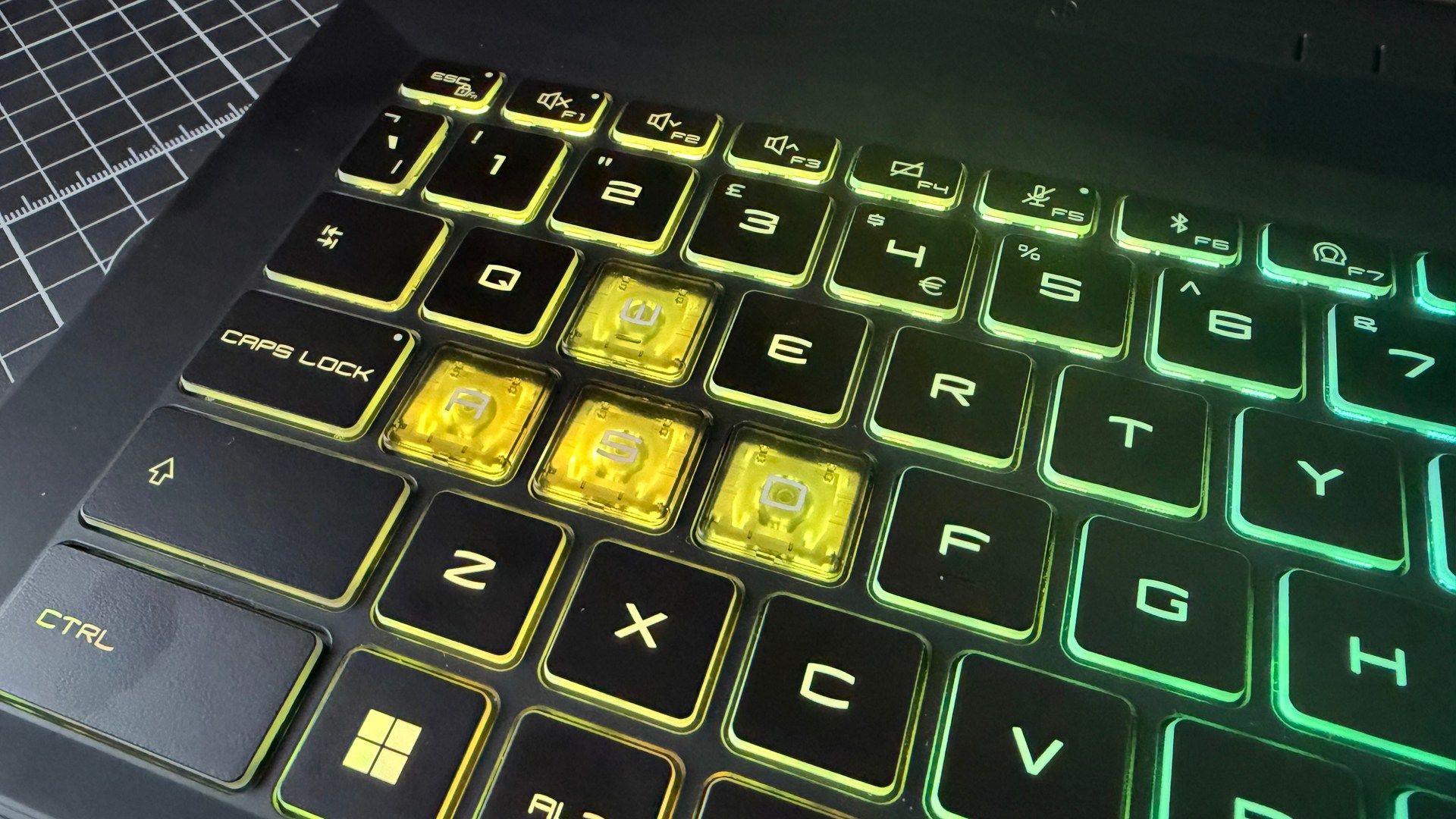
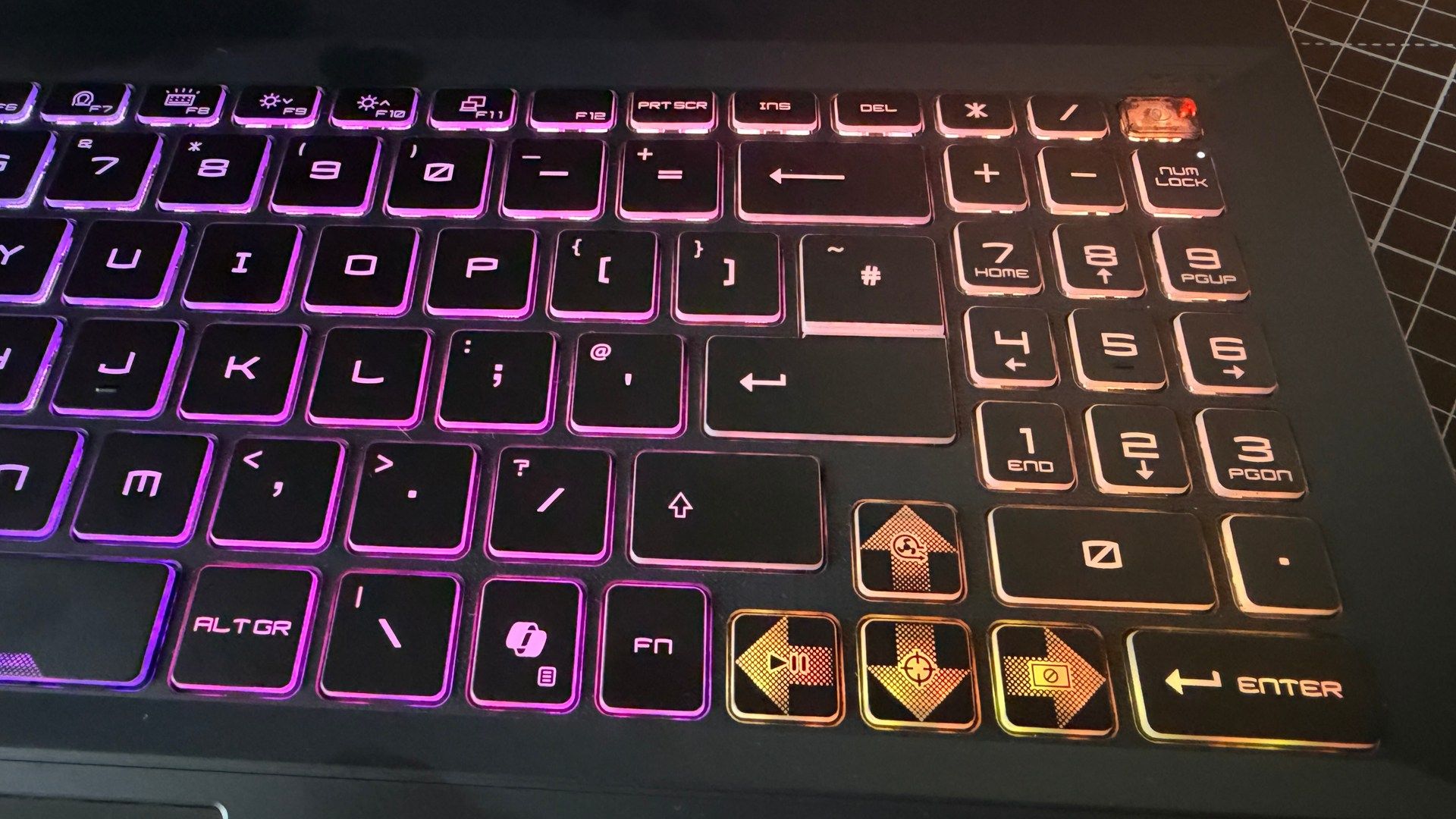
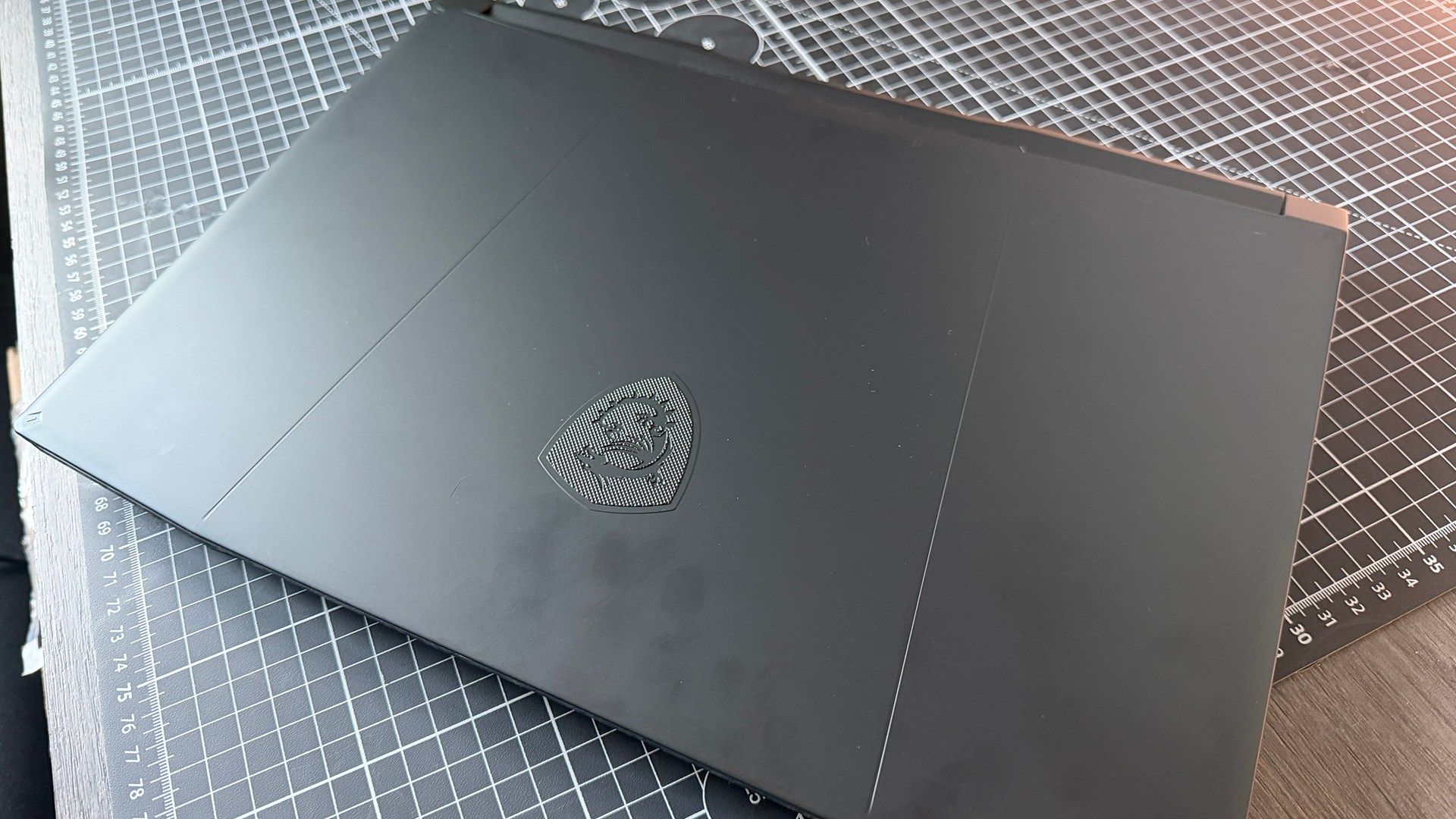
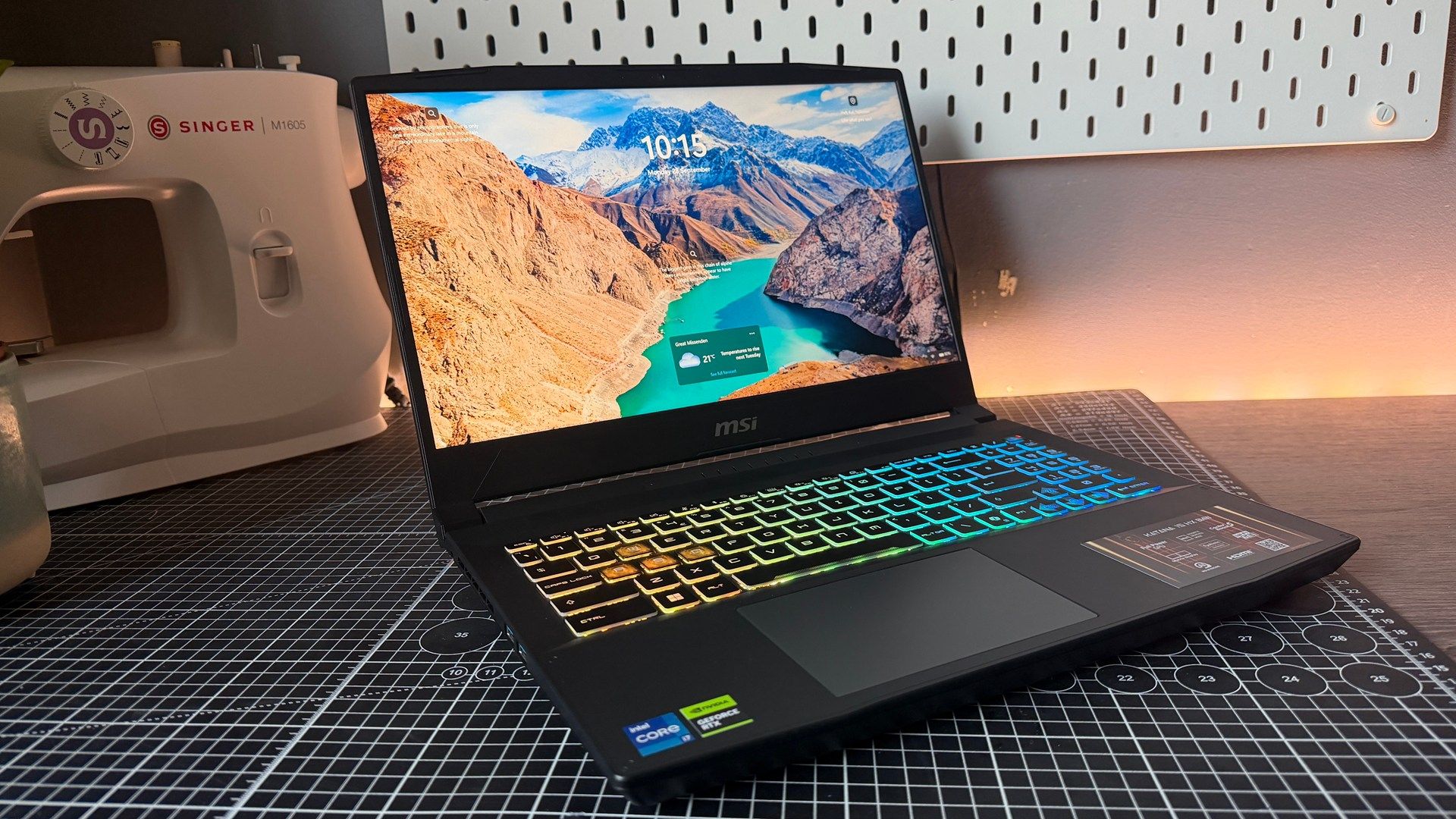
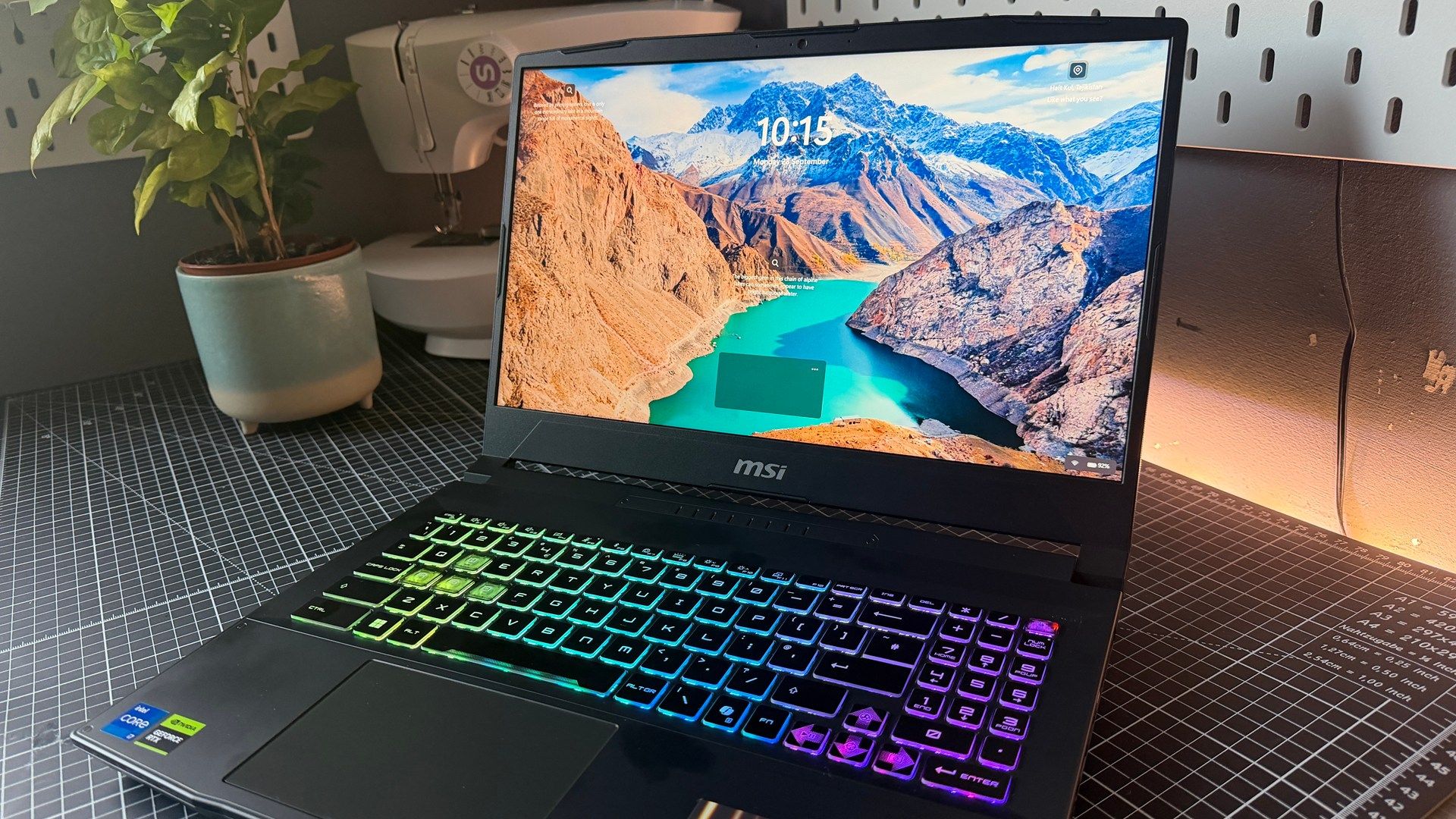
From a visual standpoint, this is very much a gaming laptop. It's not bad, but if you're a grown professional that blends a bit of work in the day, and gaming in the evening (or on your lunchbreak, who am I to judge on whether or not you fancy some midday WoW Forever dopamine), it might not be the best fit. You've got that hexagonal shaped bezel lining the display, housing the integrated webcam. The same design language along the base near the trackpad. Bold ostentatious keycaps, some of those semi-transparent—for the WASD, and power keys, along with some gaudy arrow keys as well—and it does all feel a bit plasticky too.
It's a shame because, there's no need for it in the modern era, not really, when the humble square and rectangle exist. It's not particularly abrasive, but if you're in the middle of a presentation and the new hire zones out staring at the RGB rainbow gliding across your keys, you can blame it on that, and not your 23 slides on the implementation of the new agentic optimised structured data markdown system you're rolling out for site content in Q3 2027.
(Image credit: Future)
Perhaps suprisingly, MSI's software suite is genuinely impressive. It's one of the better ones out there once you get past the myriad terms and conditions, scroll boxes, and update windows. There's multi-profile setups, mystic light control, hardware monitoring, GPU switches, recovery modes, all in a singular centralised hub, that doesn't feel that intrusive. You can live without it of course (the profiles don't seem to do that much from my own testing), but it's there for those that really want to tinker and dive into the software settings.
As always these things come with pre-installed after market antivirus (that yet again stopped me from installing the pre-requisite benchmarks and games I needed), and as always I recommend uninstalling that pronto to free up system resources. Windows Defender is still one of the best native antivirus platforms out there, and as long as you're clued up and internet savvy, you shouldn't have any major issues relying on just that.
(Image credit: Future)
As for the battery, in an amazing twist of fate, that slightly dull screen doesn't exactly help on the battery front. In PC Mark's gaming benchmark—at 50% brightness, with WiFi disabled—the Katana netted just 71 minutes from 100% down to 3% charge. That's not a lot, and only slightly better than Lenovo's Legion 5 (which scored 64 minutes).
I've got beef with that, particularly because the TUF Gaming A16, has somehow crammed in a 90 WHr battery, in the same form factor, kept the entire device cooler, runs the GPU at higher frequency, performs better, and does it for a similar price (if not cheaper in the States). That's the problem. Is 71 minutes enough if you're stuck on a train without a socket? Maybe, but it could be better, and that's the theme for the entire review. It could be better. Should be better.
Testing the long term gaming life of the laptops using the industry standard PCMark 10 gaming test.
71
Lenovo Legion 5
64
Asus TUF Gaming A16
112
PCMark 10 Gaming test Data
Continue reading...
In ol' blighty, in the realm of the surprisingly good cooking and cheap dental care, it's a whole other story. What you get for a meagre £1,300 first looks quite solid. And although, yes, that's probably three days of heating this coming winter, if you forgo the soothing warmth of your radiators for a bit you can net yourself an RTX 5060, Core i7 14650HX, and 16 GB of (gloriously dual-channel) 5,600 MT/s DDR5 RAM, all paired nicely with a crisp 2560x1440 "IPS-level" display flickering along 165 times every single second.
For that outlay, I wouldn't blame you in thinking that this is a surprisingly tempting proposition, especially as Black Friday is right around the corner. But it's not without fault, and there's some curious side-effects as a result of the cooling design, that you need to be aware of before you pull the trigger and tell grandma to grab another coat to keep warm.
Buy if...
You're after a cheap UK deal for a versatile laptop: It's not the ultimate gaming machine, no, but MSI's packed a lot of solid quality hardware in here, and for just shy of £1,300 it does beat out the competition spec for spec. You're a big fan of DLSS: That RTX 5060 does lead the field when it comes to ray tracing performance compared to its competition at a similar price point.Do not buy if...
You're not a fan of the "gamer" aesthetic: It's big bold and ostentatious, with a hexagonal screen bezel, and overall body design. Everywhere you look, it clearly states itself as "for the gamer", so if you're taking this into a business meeting, look away. You want a CPU and GPU combo that's fully unlocked: The Katana 15 HX technically has a 115 W TGP, but it often taps out at half that, with flailing clock-speeds as a result, we suspect due to CPU bottlenecking.MSI Katana 15 HX - Features
Future
Future
Processor | Intel Core i7 14650HX PNG |
Cores | 8 Performance, 8 Efficient |
Threads | 24 |
Boost clock speed | 5.2 GHz |
Graphics | Nvidia GeForce RTX 5060 8 GB |
RAM | 16 GB (2x8GB) DDR5-5600 MT/s |
Storage | 1 TB Samsung MZVL81T0HFLB-00BTW PCIe 4.0 |
Display | 15.6-inch "IPS-Level" |
Resolution | 2560 x 1440 |
Refresh | 165 Hz |
Battery | 75 Whr |
Power brick | 240 W |
Weight | 2.4 kg |
Dimensions | 359 x 262 x 25.5 mm |
Price | £1,299 / $1,799 |
So, we've covered the basics already, chunky GPU that kinda pairs nicely with the 2560 x 1440 "IPS-level" display, 115 W TGP which should give the card a bit of leg room to clock-up nice and high. Should. You get WiFi 6E, and Bluetooth as standard. As well as three USB Type-A ports, a USB-C, Ethernet, 3.5 mm audio, and HDMI out too. That's not a huge amount of connectivity; you may need a USB hub or dongle if you're going to spin this up as your main rig with a few extra periphs, but it's a comfortable enough experience if you're on the move, and I've seen worse recently. Razer's Blade 16, doesn't even come with ethernet and that thing costs a staggering five grand or thereabouts (although to be fair it is very good).
The SSD is a bit underwhelming mind you. It's one of Samsung's… well, I'm not going to reel off the serial code because it's one of those cryptic OEM-only designations that makes no sense to any human that reads it, but in short its an OEM PM9C1b, PCIe 4.0 SSD, that should top out at 7 GB/s on the read and 5.7 GB/s on the writes. It's based on Samsung's in-house Piccolo controller, and taps into 236-layer TLC V-NAND, it's not too dissimilar to the 990 Evo Samsung launched a couple of years back at this point. So y'know, eh…
As for the chip, that's Intel's Raptor Lake Core i7 14650HX. Again a little dated, but you do get eight performance cores and eight efficient cores for fully 24 threads, and a max turbo clock speed of 5.2 GHz at full tilt. But it's hot, real hot, and that is I think the biggest issue that the B14W currently has. Certainly if we compare it to something like Asus' TUF Gaming A16.
MSI Katana 15 HX - Value
(Image credit: Future)
Alright, yep let's talk value. Ahem... It's a bit of a double-edged sword. Something that ironically a traditional Katana isn't, and it's mostly dependent on which part of the globe you sit. If you're in the US $1,800 for this kit-out is absurd. Particularly when you have laptops like the Lenovo Legion 5 available for a near identical spec, but with a far better OLED screen for less than that.
And it's that screen that really lets down the whole affair. MSI has it listed as "IPS-level", and to be frank, it doesn't look anything like an IPS. I've got it sat next to two separate IPS monitors right now, and the brightness is dull, the contrast underwhelming, and the color difference between the three genuinely astounding. If you'd have told me this was a TN panel, I'd believe you, and even then go "man, it's a bit rough by modern TN standards, aint it?" Like yes, it's great it's got that 165 Hz refresh rate, and a 16:10 aspect ratio, and a pixel density that puts 4K 32-inch monitors to shame, but it just absolutely pulls you out of the immersion when you see just how dull it looks by comparison to most modern offerings.
That's almost excusable at the £1200 - £1300 mark, and unconscionable at $1,800 (I have seen this cheaper during my time testing, but let's not assume it's always on offer). Even so, it just leaves a bit of a sour taste in your mouth, particularly when compared to that A16, or the Lenovo Legion 5.
MSI Katana 15 HX - Sound
(Image credit: Future)
I'll talk more about this momentarily, but the fans are not particularly that noisy under load. They are spinning and going at what I assume is full-tilt, but compared to the likes of the Lenovo, it's a whole other ball game. Dare I say, you don't need a set of noise cancelling headphones to drown out the sound of this thing.
As for the speakers, they're ok. Bass is a bit muted, there's not a lot of breadth to the soundscape (perhaps unsurprising given the form factor), but clarity is up there, and there's no tinniness in the upper trebles. If you're listening to Blood in the Bayou by River Lume and Spearfisher, you can hear every single note of the banjo as clear as day. Yes it does lack the warmth and thrum you'd expect from a full setup, but again, it's two tiny tweeters.
MSI Katana 15 HX - Performance
(Image credit: Future)
Things don't fair particularly better in the performance department either. Although yes it does have a dual-channel RAM setup (thank god, because I don't think I could cope if it didn't), CPU performance is woefully under par compared to even the Core i7 13650HX in the Legion 5, and in-game things get considerably less impressive, even though it has that 115W TGP.
Previous
1 / 4
Next
1080p gaming performance
Running games at a normalised resolution to compare frame rates at the same level
Cyberpunk 2077 (1080p RT Ultra)Baldur's Gate 3 (1080p Ultra)Black Myth: Wukong benchmarking tool (1080p High)F1 24 (1080p Ultra High)Metro Exodus Enhanced Edition (1080p Ultra)
Avg FPS
1% Low FPS
MSI Katana 15 HX | RTX 5060 115 W | i7 14650HX
32
21
Lenovo Legion 5 | RTX 5060 115 W | i7 13650HX
29
15
Asus TUF Gaming A16 | RTX 5050 115 W | Ryzen 7 260
31
21
| Product | Value |
|---|---|
| MSI Katana 15 HX | RTX 5060 115 W | i7 14650HX | 32 Avg FPS, 21 1% Low FPS |
| Lenovo Legion 5 | RTX 5060 115 W | i7 13650HX | 29 Avg FPS, 15 1% Low FPS |
| Asus TUF Gaming A16 | RTX 5050 115 W | Ryzen 7 260 | 31 Avg FPS, 21 1% Low FPS |
Cyberpunk 2077 (1080p RT Ultra) Data
Take it into Cyberpunk 2077, at 1080p with ray tracing dialed up to Ultra, and it runs only a single frame per second faster than the TUF Gaming A16. Which would be fine, if it wasn't for the fact that laptop's running an RTX 5050, not the more powerful RTX 5060. In fact the Katana behaves almost as badly as Lenovo's memory starved RTX 5060 does.
Things do improve when you turn the DLSS fun times on of course, and at the screen's native res. we saw exactly that, with the frame rate shooting up from 20 fps to 64 fps. But then logically that makes sense as we're shifting more of the load away from the CPU and onto the GPU with those interpolated frames.
And it's definitely the CPU that's the crux of the issue here too. Jump into Baldur's Gate 3, and there's an even larger discrepancy between it and the TUF. At 1080p again, the MSI managed just 50 fps, versus that plucky little RTX 5050's 63 fps. In fact you can go down the entire list of benchmarks, and at every single 1080p level, the Asus TUF Gaming A16 is either close, or beating it. For a lower model GPU, and a card that scores lower in every synthetic test we can run. It's astounding.
Creator and system performance
Testing the non-gaming performance of the laptops.
7zip 24.07Cinebench 2024Blender 4.2.0 (junkshop)Procyon
Compressing (GIPS)
Decompressing (GIPS)
MSI Katana 15 HX | RTX 5060 115 W | i7 14650HX
100.46
105.57
Lenovo Legion 5 | RTX 5060 115 W | i7 13650HX
66.83
113
Asus TUF Gaming A16 | RTX 5050 115 W | Ryzen 7 260
82.31
119.91
| Product | Value |
|---|---|
| MSI Katana 15 HX | RTX 5060 115 W | i7 14650HX | 100.46 Compressing (GIPS), 105.57 Decompressing (GIPS) |
| Lenovo Legion 5 | RTX 5060 115 W | i7 13650HX | 66.83 Compressing (GIPS), 113 Decompressing (GIPS) |
| Asus TUF Gaming A16 | RTX 5050 115 W | Ryzen 7 260 | 82.31 Compressing (GIPS), 119.91 Decompressing (GIPS) |
7zip 24.07 Data
That hypothesis on the chip is drawn entirely from observing both the temperature testing, and the GPU clock-speeds. Of the three budget laptops I've tested here, the CPU ran the hottest both on max and on average, and the GPU clocked in the lowest at 2,305 MHz, only drawing on 68 W of total graphical power. Telling.
System performance
Testing power and thermal performance of the laptops.
Gaming temperaturesGPU statsSystem temperatures
Avg CPU (°C)
Max CPU (°C)
Avg GPU (°C)
Max GPU (°C)
MSI Katana 15 HX | RTX 5060 115 W | i7 14650HX
77
95
77
82
Lenovo Legion 5 | RTX 5060 115 W | i7 13650HX
76
91
81
85
Asus TUF Gaming A16 | RTX 5050 115 W | Ryzen 7 260
71
87
60
85
| Product | Value |
|---|---|
| MSI Katana 15 HX | RTX 5060 115 W | i7 14650HX | 77 Avg CPU (°C), 95 Max CPU (°C), 77 Avg GPU (°C), 82 Max GPU (°C) |
| Lenovo Legion 5 | RTX 5060 115 W | i7 13650HX | 76 Avg CPU (°C), 91 Max CPU (°C), 81 Avg GPU (°C), 85 Max GPU (°C) |
| Asus TUF Gaming A16 | RTX 5050 115 W | Ryzen 7 260 | 71 Avg CPU (°C), 87 Max CPU (°C), 60 Avg GPU (°C), 85 Max GPU (°C) |
Gaming temperatures Data
MSI Katana 15 HX - Aesthetics
Future
Future
Future
Future
From a visual standpoint, this is very much a gaming laptop. It's not bad, but if you're a grown professional that blends a bit of work in the day, and gaming in the evening (or on your lunchbreak, who am I to judge on whether or not you fancy some midday WoW Forever dopamine), it might not be the best fit. You've got that hexagonal shaped bezel lining the display, housing the integrated webcam. The same design language along the base near the trackpad. Bold ostentatious keycaps, some of those semi-transparent—for the WASD, and power keys, along with some gaudy arrow keys as well—and it does all feel a bit plasticky too.
It's a shame because, there's no need for it in the modern era, not really, when the humble square and rectangle exist. It's not particularly abrasive, but if you're in the middle of a presentation and the new hire zones out staring at the RGB rainbow gliding across your keys, you can blame it on that, and not your 23 slides on the implementation of the new agentic optimised structured data markdown system you're rolling out for site content in Q3 2027.
MSI Katana 15 HX - Software
(Image credit: Future)
Perhaps suprisingly, MSI's software suite is genuinely impressive. It's one of the better ones out there once you get past the myriad terms and conditions, scroll boxes, and update windows. There's multi-profile setups, mystic light control, hardware monitoring, GPU switches, recovery modes, all in a singular centralised hub, that doesn't feel that intrusive. You can live without it of course (the profiles don't seem to do that much from my own testing), but it's there for those that really want to tinker and dive into the software settings.
As always these things come with pre-installed after market antivirus (that yet again stopped me from installing the pre-requisite benchmarks and games I needed), and as always I recommend uninstalling that pronto to free up system resources. Windows Defender is still one of the best native antivirus platforms out there, and as long as you're clued up and internet savvy, you shouldn't have any major issues relying on just that.
MSI Katana 15 HX - Battery life
(Image credit: Future)
As for the battery, in an amazing twist of fate, that slightly dull screen doesn't exactly help on the battery front. In PC Mark's gaming benchmark—at 50% brightness, with WiFi disabled—the Katana netted just 71 minutes from 100% down to 3% charge. That's not a lot, and only slightly better than Lenovo's Legion 5 (which scored 64 minutes).
I've got beef with that, particularly because the TUF Gaming A16, has somehow crammed in a 90 WHr battery, in the same form factor, kept the entire device cooler, runs the GPU at higher frequency, performs better, and does it for a similar price (if not cheaper in the States). That's the problem. Is 71 minutes enough if you're stuck on a train without a socket? Maybe, but it could be better, and that's the theme for the entire review. It could be better. Should be better.
Battery life
Testing the long term gaming life of the laptops using the industry standard PCMark 10 gaming test.
PCMark 10 Gaming test
MSI Katana 15 HX71
Lenovo Legion 5
64
Asus TUF Gaming A16
112
| Product | Value |
|---|---|
| MSI Katana 15 HX | 71 |
| Lenovo Legion 5 | 64 |
| Asus TUF Gaming A16 | 112 |
PCMark 10 Gaming test Data
Continue reading...
