

7MMO
Moderator
Need to Know
What is it? The latest in a long line of life-absorbing sports management sims.
Release date November 10, 2026
Expect to pay $60/£50
Developer Sports Interactive
Publisher Sega
Reviewed on Ryzen 7 9800X3D, Radeon RX 9070XT, 16GB RAM
Steam Deck TBA
Link Official site
It's difficult to convey to non-players how deeply Football Manager gets under your skin. It's the kind of game that becomes your mental screensaver, the fallback topic whenever your brain isn't explicitly required to think about something else. A Slack DM came in this morning and for a second I interpreted 'DM – [Name]' as Slack assigning my colleague the defensive midfielder position. When did they add that feature? I caught myself thinking for a second.
That in itself doesn't mean Football Manager 27 is a great game. This series is capable of fostering fixation even on its off games, like last year's tile-ridden UI tangle FM26. But this new release makes meaningful progress by untangling that UI, improving the flow of the game between matches, and—the holy grail—giving you some clue as to why you're losing, and what you can do about it.
(Image credit: Sega)
The latter point comes thanks to the introduction of the 'tactical effectiveness' system. This is a visual rating of all the factors that affect your team's performance, and it lives in your tactics screen as a colour-coded scale. The better all those underlying factors are working, the higher your tactical effectiveness scale goes. Click on it and you see under the hood of FM's simulation, at all the elements which determine your squad's performance, from individual player ability and training effectiveness to each player's degree of buy-in to your tactical vision.
That screen gives a degree of transparency to what's deciding whether you win or lose, and having played these games since Championship Manager 2, I've been wishing for that transparency for a long time.
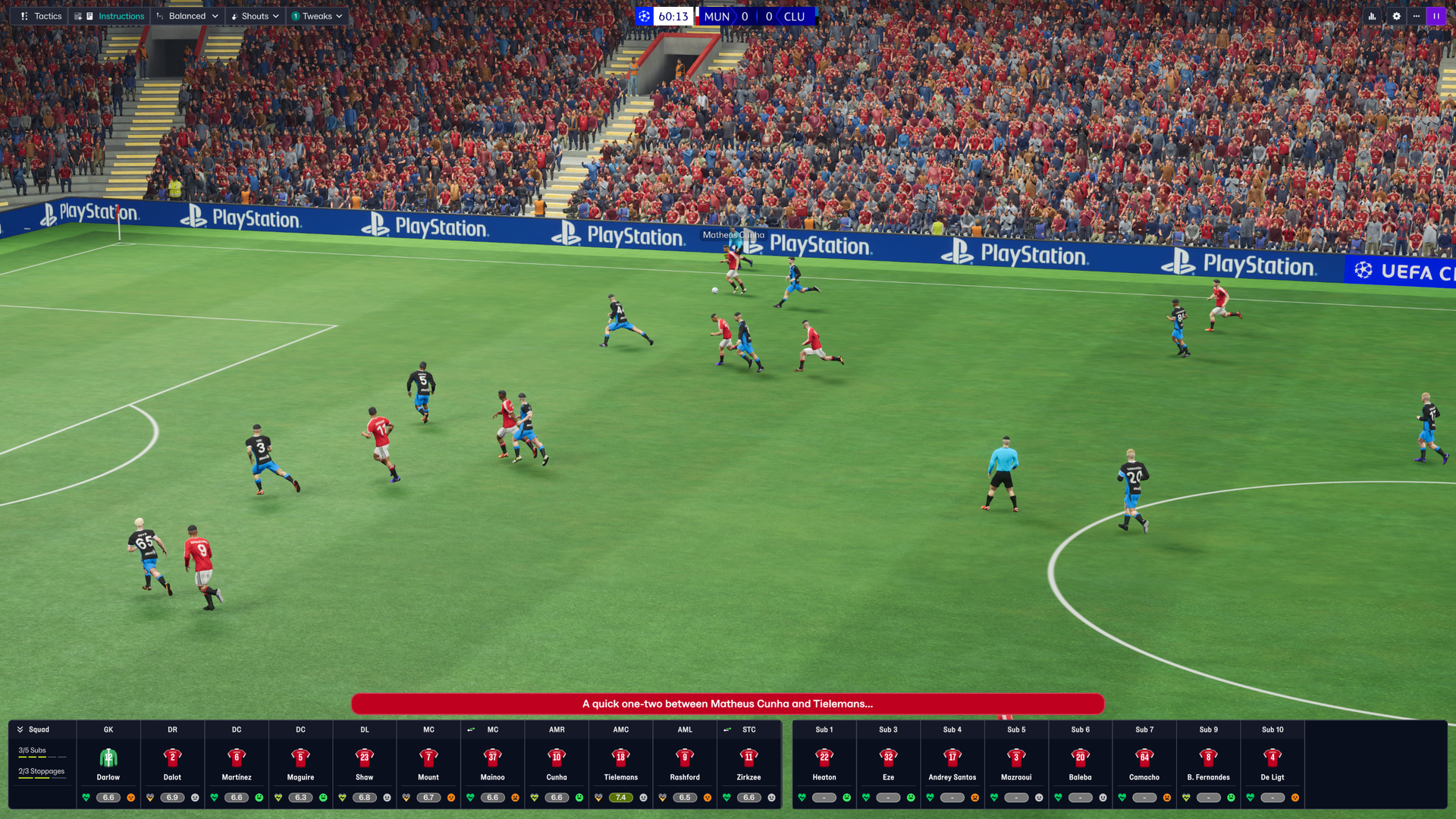
But it's not without its issues. This being the introduction of this new system, its effects feel overly exaggerated. If your team has a low tactical effectiveness they'll lollop about on the pitch like it's their first day on Earth, even in the most basic formations that my school's under 11s side could execute. It's extremely frustrating to watch the sport's absolute elite wandering about in the final third like they've forgotten where the goal is, or witness Champions League-calibre centre backs totally baffled by their markers running in a straight line towards goal. This is probably how it feels to be a Man United manager in real life, but it still feels like a failing of the match engine to visualise poor tactical effectiveness in a true-to-life way.
(Image credit: Sega)
The flipside of that coin is that there's a lot of gratification to be had in increasing that TE scale, and FM 27 does a good job of surfacing the ways to do it. It means setting more tactical familiarity sessions in the training screen, a doorway I haven't personally darkened for years as a manager since it allowed me to delegate that task to my assistant. It also finds its way into recruitment, showing you a rough prediction of how well a player will contribute to that all-important rating even before you sign them. I really enjoy this new way of thinking about signings, and relish the chance to be proactive about improving performances instead of changing things at random and crossing my fingers.
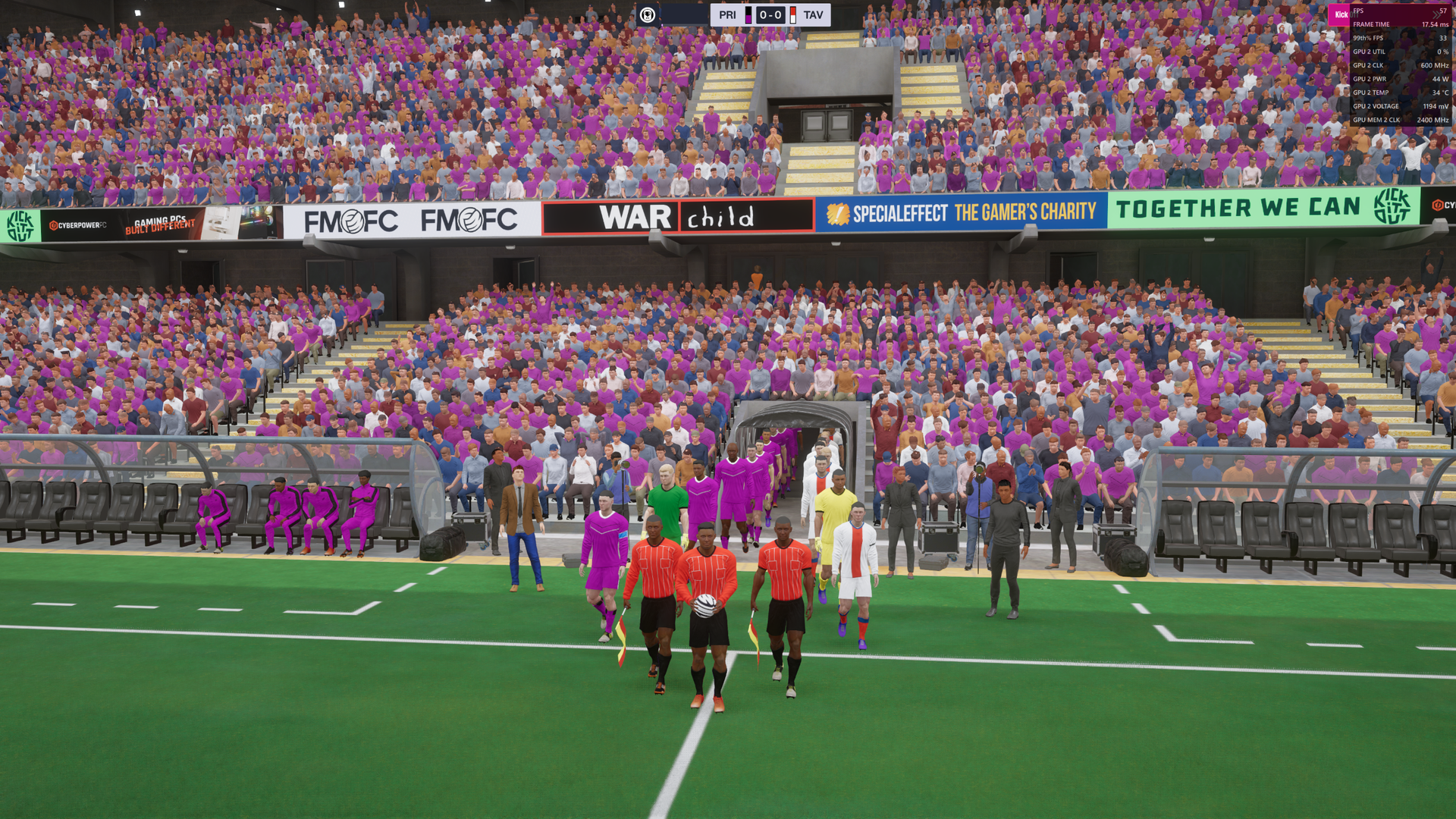
On the pitch, there's some modest progress since last year. New animations, specifically flair passes and players recovering from a stumble after being shoulder-barged, tell you something useful about that player's attributes and how they can be used. Meanwhile on the presentation front, there are a few new angles during pre-match sequences and trophy ceremonies.
There's also a lot of the usual release-era nonsense. In my save I seem to have a goal waved off for offside every twenty minutes, and keepers seem to have started coating their boots and gloves in teflon when receiving the most straightforward backpasses or clearing up routine balls. These odd glitches happen every year before the first few patches roll out, and update 27.1.0 does seem to address most of the odd match engine behaviour I've noticed.
(Image credit: Sega)
But I'm disappointed that progress is that gradual. Particularly as FM's move to the Unity engine was so disruptive, prompting the series to skip a year. I expected that engine switch might mean the match engine evolves more quickly, but that doesn't seem to be the case based on this release.
Instead, the really significant additions and improvements can be found in the nooks and crannies, the boring bits you wouldn't write about in the Steam description. How do you make navigable menus, more game setup customization options and quicker progress between matches sound sexy? Nevertheless, these are the changes that add up and make FM 27 feel much more enjoyable than last year's game.
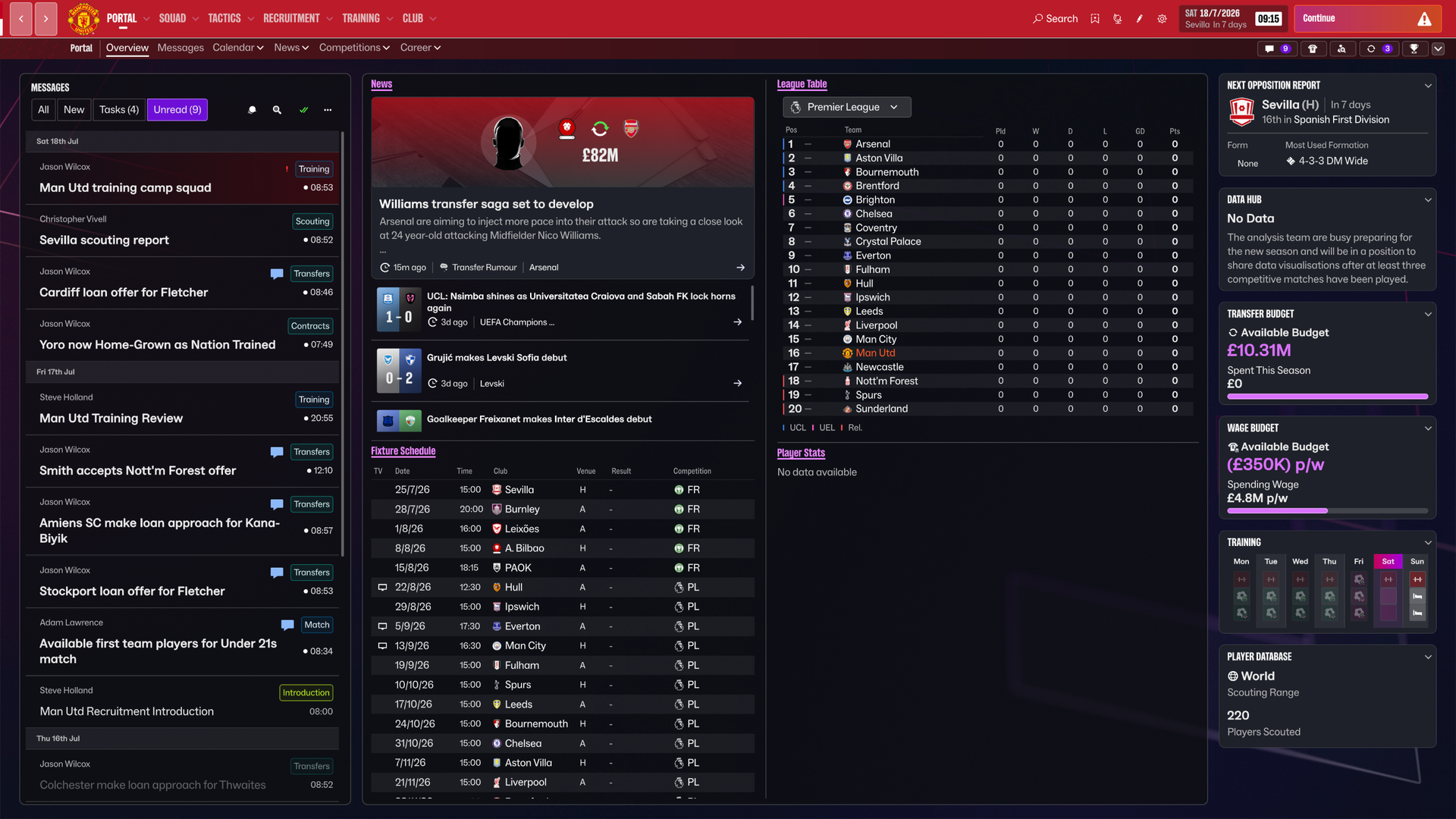
The prime example of these small but mighty changes is the 'continue flow'. When you start a new game, you can now control how often the game stops the passage of time to return you to your inbox after you hit 'continue'. Hardly the most exciting feature on paper, but it addresses a crucial and longstanding problem: progress had become punitively slow. More than any loss at home to a relegation side or any unreasonable telling-off from the board, it was this feeling of wading nose-deep through molasses that sapped my desire to keep playing recent FM games, and it turns out that fixing the problem is as simple as selecting the 'streamlined' continue flow so that the game stops progressing time less often and moves you from match to match at a faster rate.
(Image credit: Sega)
This is a game about setting long-term plans and watching them come to fruition. Winning one match isn't where the payoff comes, it's three seasons in when you see how much your youth academy graduate's stats have developed. So it really does matter that FM 27 hastens the pace and you can see those long term plans resolve.
There's been something of a deft Cruyff turn from Sports Interactive on the direction of its UI this year, after the overhaul in FM 26 was received as positively as a taxation on laughter. The menu tiles have been pared right back, menus themselves are much faster to load and in general it's more intuitive to get to the screens you're looking for.
That doesn't mean Football Manager 27 has a good UI. I still too often find myself hunting for basic actions now buried several menus deep, like having to click Portal - Career - My Profile - Actions - Go On Holiday to start simming through fixtures. For reference, here's how it worked in Championship Manager 01/02: [Manager Name] - Go On Holiday.
(Image credit: Sega)
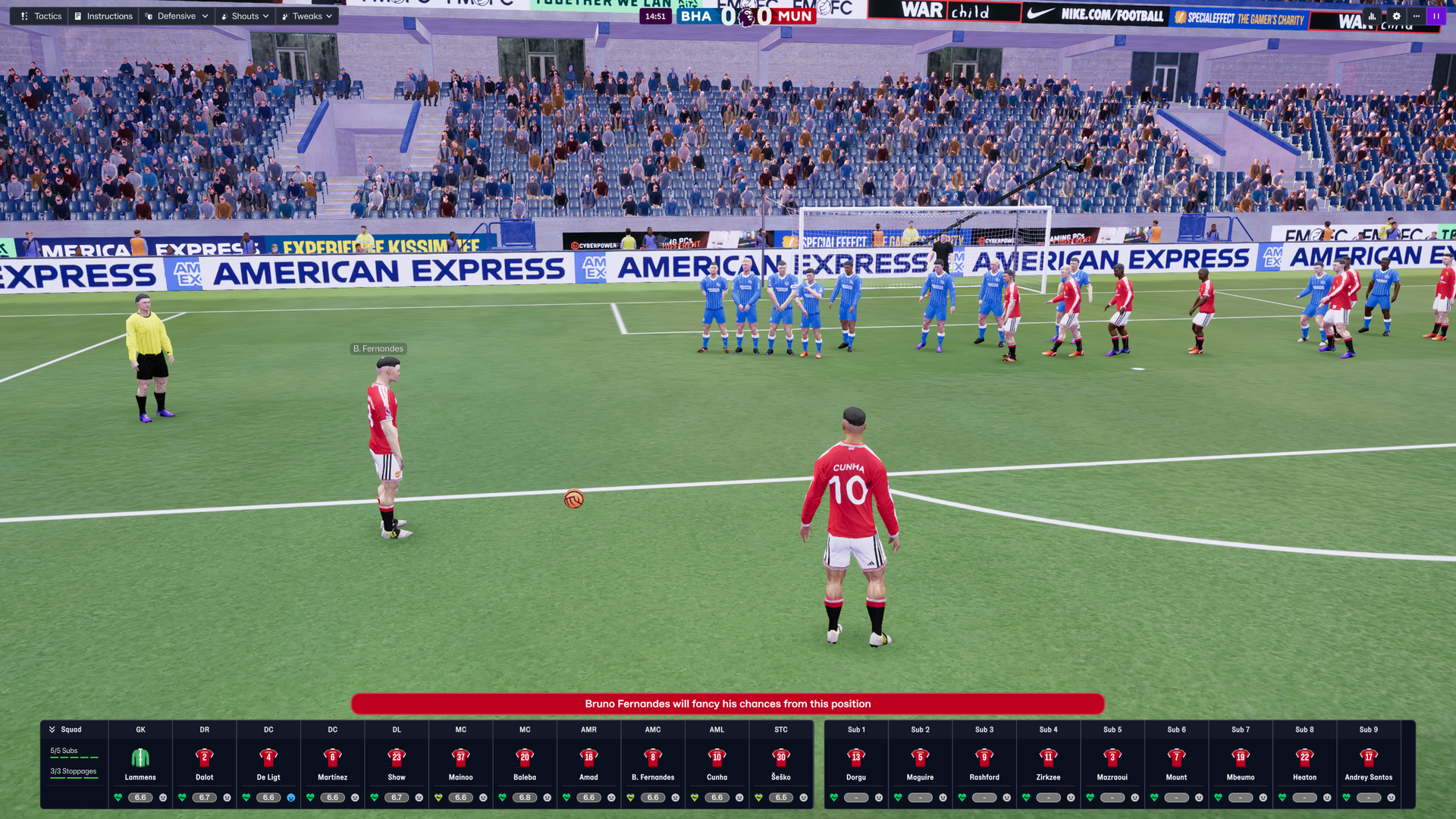
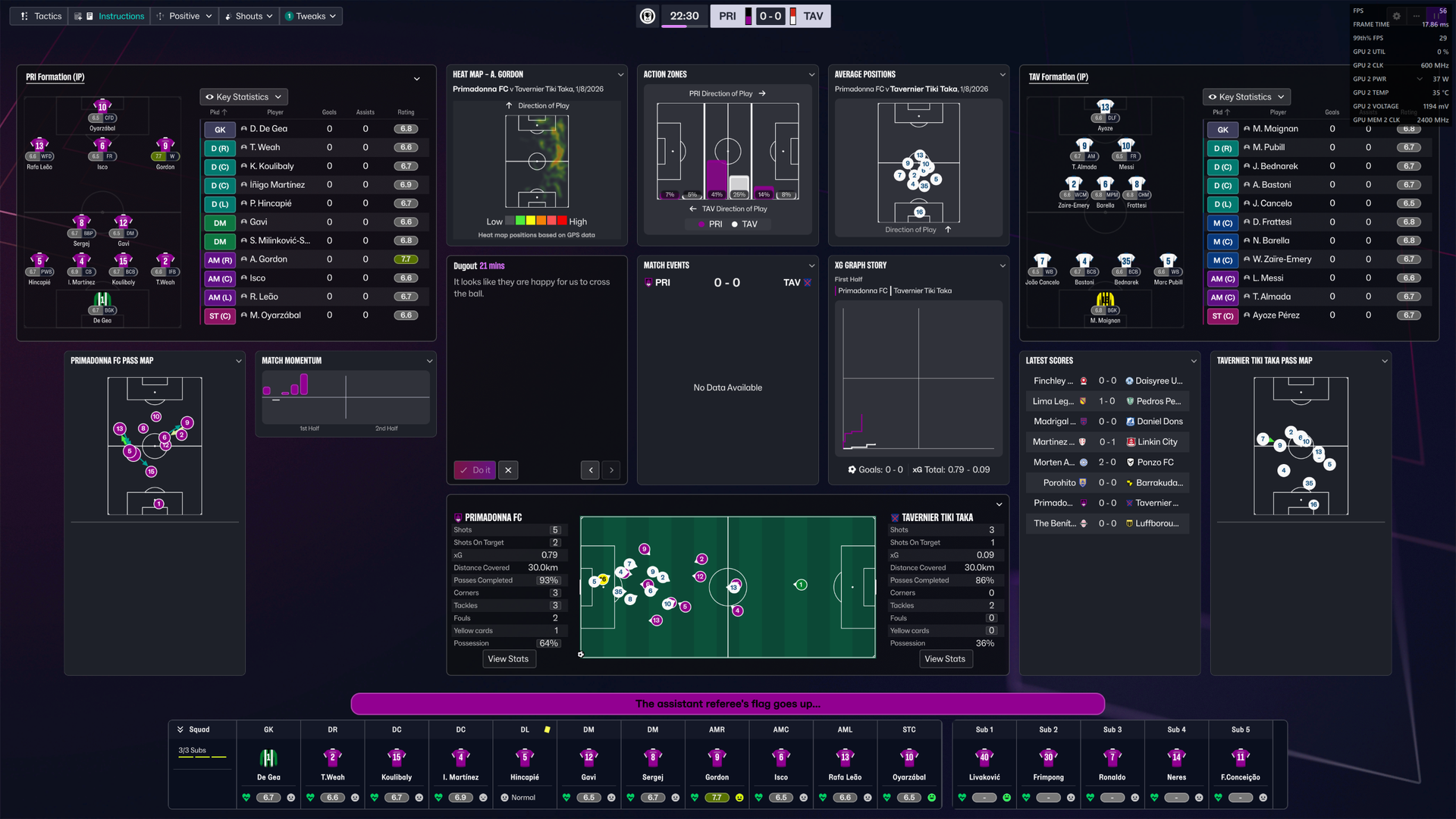
I still find myself struggling to process the morass of information being thrown at me by certain menus too, particularly the matchday screens. More detail does not equal more fun, and most of these info panels are useless to me, serving only to obscure the bits I do want to check. There's more customisation this year to allow what these menus show you, but you can't remove info panels entirely or simplify screens.
Just like the obsession that a Football Manager game inspires, it also has a way of making minor annoyances feel big over time. When that happens, you have to zoom out and remind yourself it got you to care this much in the first place because the experience is fundamentally great. It's like a Paradox strategy game where all the nobles are 20-year-old inside forwards. It's a labyrinth of menus that makes you want to give up and do something else, but you don't. Because there's so much sandbox potential, such a vast and detailed world being simulated in minute detail, and such a feeling of payoff when those long-term plans come good.
And that's why it's so significant that Football Manager's biggest changes are about giving you transparency about what's going wrong, what you need to do to fix it, and then letting you progress at the speed you want to. That makes it feel less like a complicated German board game you lost the instructions for, and more like managing a football team.
Continue reading...
What is it? The latest in a long line of life-absorbing sports management sims.
Release date November 10, 2026
Expect to pay $60/£50
Developer Sports Interactive
Publisher Sega
Reviewed on Ryzen 7 9800X3D, Radeon RX 9070XT, 16GB RAM
Steam Deck TBA
Link Official site
It's difficult to convey to non-players how deeply Football Manager gets under your skin. It's the kind of game that becomes your mental screensaver, the fallback topic whenever your brain isn't explicitly required to think about something else. A Slack DM came in this morning and for a second I interpreted 'DM – [Name]' as Slack assigning my colleague the defensive midfielder position. When did they add that feature? I caught myself thinking for a second.
That in itself doesn't mean Football Manager 27 is a great game. This series is capable of fostering fixation even on its off games, like last year's tile-ridden UI tangle FM26. But this new release makes meaningful progress by untangling that UI, improving the flow of the game between matches, and—the holy grail—giving you some clue as to why you're losing, and what you can do about it.
(Image credit: Sega)
The latter point comes thanks to the introduction of the 'tactical effectiveness' system. This is a visual rating of all the factors that affect your team's performance, and it lives in your tactics screen as a colour-coded scale. The better all those underlying factors are working, the higher your tactical effectiveness scale goes. Click on it and you see under the hood of FM's simulation, at all the elements which determine your squad's performance, from individual player ability and training effectiveness to each player's degree of buy-in to your tactical vision.
That screen gives a degree of transparency to what's deciding whether you win or lose, and having played these games since Championship Manager 2, I've been wishing for that transparency for a long time.
But it's not without its issues. This being the introduction of this new system, its effects feel overly exaggerated. If your team has a low tactical effectiveness they'll lollop about on the pitch like it's their first day on Earth, even in the most basic formations that my school's under 11s side could execute. It's extremely frustrating to watch the sport's absolute elite wandering about in the final third like they've forgotten where the goal is, or witness Champions League-calibre centre backs totally baffled by their markers running in a straight line towards goal. This is probably how it feels to be a Man United manager in real life, but it still feels like a failing of the match engine to visualise poor tactical effectiveness in a true-to-life way.
(Image credit: Sega)
The flipside of that coin is that there's a lot of gratification to be had in increasing that TE scale, and FM 27 does a good job of surfacing the ways to do it. It means setting more tactical familiarity sessions in the training screen, a doorway I haven't personally darkened for years as a manager since it allowed me to delegate that task to my assistant. It also finds its way into recruitment, showing you a rough prediction of how well a player will contribute to that all-important rating even before you sign them. I really enjoy this new way of thinking about signings, and relish the chance to be proactive about improving performances instead of changing things at random and crossing my fingers.
On the pitch, there's some modest progress since last year. New animations, specifically flair passes and players recovering from a stumble after being shoulder-barged, tell you something useful about that player's attributes and how they can be used. Meanwhile on the presentation front, there are a few new angles during pre-match sequences and trophy ceremonies.
There's also a lot of the usual release-era nonsense. In my save I seem to have a goal waved off for offside every twenty minutes, and keepers seem to have started coating their boots and gloves in teflon when receiving the most straightforward backpasses or clearing up routine balls. These odd glitches happen every year before the first few patches roll out, and update 27.1.0 does seem to address most of the odd match engine behaviour I've noticed.
(Image credit: Sega)
But I'm disappointed that progress is that gradual. Particularly as FM's move to the Unity engine was so disruptive, prompting the series to skip a year. I expected that engine switch might mean the match engine evolves more quickly, but that doesn't seem to be the case based on this release.
Instead, the really significant additions and improvements can be found in the nooks and crannies, the boring bits you wouldn't write about in the Steam description. How do you make navigable menus, more game setup customization options and quicker progress between matches sound sexy? Nevertheless, these are the changes that add up and make FM 27 feel much more enjoyable than last year's game.
The prime example of these small but mighty changes is the 'continue flow'. When you start a new game, you can now control how often the game stops the passage of time to return you to your inbox after you hit 'continue'. Hardly the most exciting feature on paper, but it addresses a crucial and longstanding problem: progress had become punitively slow. More than any loss at home to a relegation side or any unreasonable telling-off from the board, it was this feeling of wading nose-deep through molasses that sapped my desire to keep playing recent FM games, and it turns out that fixing the problem is as simple as selecting the 'streamlined' continue flow so that the game stops progressing time less often and moves you from match to match at a faster rate.
(Image credit: Sega)
This is a game about setting long-term plans and watching them come to fruition. Winning one match isn't where the payoff comes, it's three seasons in when you see how much your youth academy graduate's stats have developed. So it really does matter that FM 27 hastens the pace and you can see those long term plans resolve.
There's been something of a deft Cruyff turn from Sports Interactive on the direction of its UI this year, after the overhaul in FM 26 was received as positively as a taxation on laughter. The menu tiles have been pared right back, menus themselves are much faster to load and in general it's more intuitive to get to the screens you're looking for.
That doesn't mean Football Manager 27 has a good UI. I still too often find myself hunting for basic actions now buried several menus deep, like having to click Portal - Career - My Profile - Actions - Go On Holiday to start simming through fixtures. For reference, here's how it worked in Championship Manager 01/02: [Manager Name] - Go On Holiday.
(Image credit: Sega)
I still find myself struggling to process the morass of information being thrown at me by certain menus too, particularly the matchday screens. More detail does not equal more fun, and most of these info panels are useless to me, serving only to obscure the bits I do want to check. There's more customisation this year to allow what these menus show you, but you can't remove info panels entirely or simplify screens.
Just like the obsession that a Football Manager game inspires, it also has a way of making minor annoyances feel big over time. When that happens, you have to zoom out and remind yourself it got you to care this much in the first place because the experience is fundamentally great. It's like a Paradox strategy game where all the nobles are 20-year-old inside forwards. It's a labyrinth of menus that makes you want to give up and do something else, but you don't. Because there's so much sandbox potential, such a vast and detailed world being simulated in minute detail, and such a feeling of payoff when those long-term plans come good.
And that's why it's so significant that Football Manager's biggest changes are about giving you transparency about what's going wrong, what you need to do to fix it, and then letting you progress at the speed you want to. That makes it feel less like a complicated German board game you lost the instructions for, and more like managing a football team.
Continue reading...

